Saturday, January 3, 2026
Beyond the Filter: Love, Identity, and Truth in a Digital Future
Atif

Beyond the Filter: Love, Identity, and Truth in a Digital Future
In today’s world, and even more in the future we are stepping into, people are no longer known by who they are—but by how they appear. A profile picture speaks before a person does. Filters arrive before feelings. Algorithms decide visibility, value, and sometimes even worth.
This reality makes an old poetic question deeply modern:
Can someone truly love us for who we are, and not for what they see?
Inspired by the idea behind “For Anne Gregory”, this story explores love, identity, and truth in a future shaped by technology—but still haunted by very human emotions.
A World Where Appearances Are Designed
The year is 2042.
Cities glow all night, not because people are awake—but because screens are. Humans live half their lives online. Digital identities are no longer optional; they are necessary. Your online presence determines your opportunities, friendships, and sometimes your survival.
Hair color can be changed instantly. Skin tone, voice texture, even facial expressions are adjustable through AI enhancement layers. People don’t ask, “Who are you?”
They ask, “Which version of you should I see?”
In this world lived Anya.
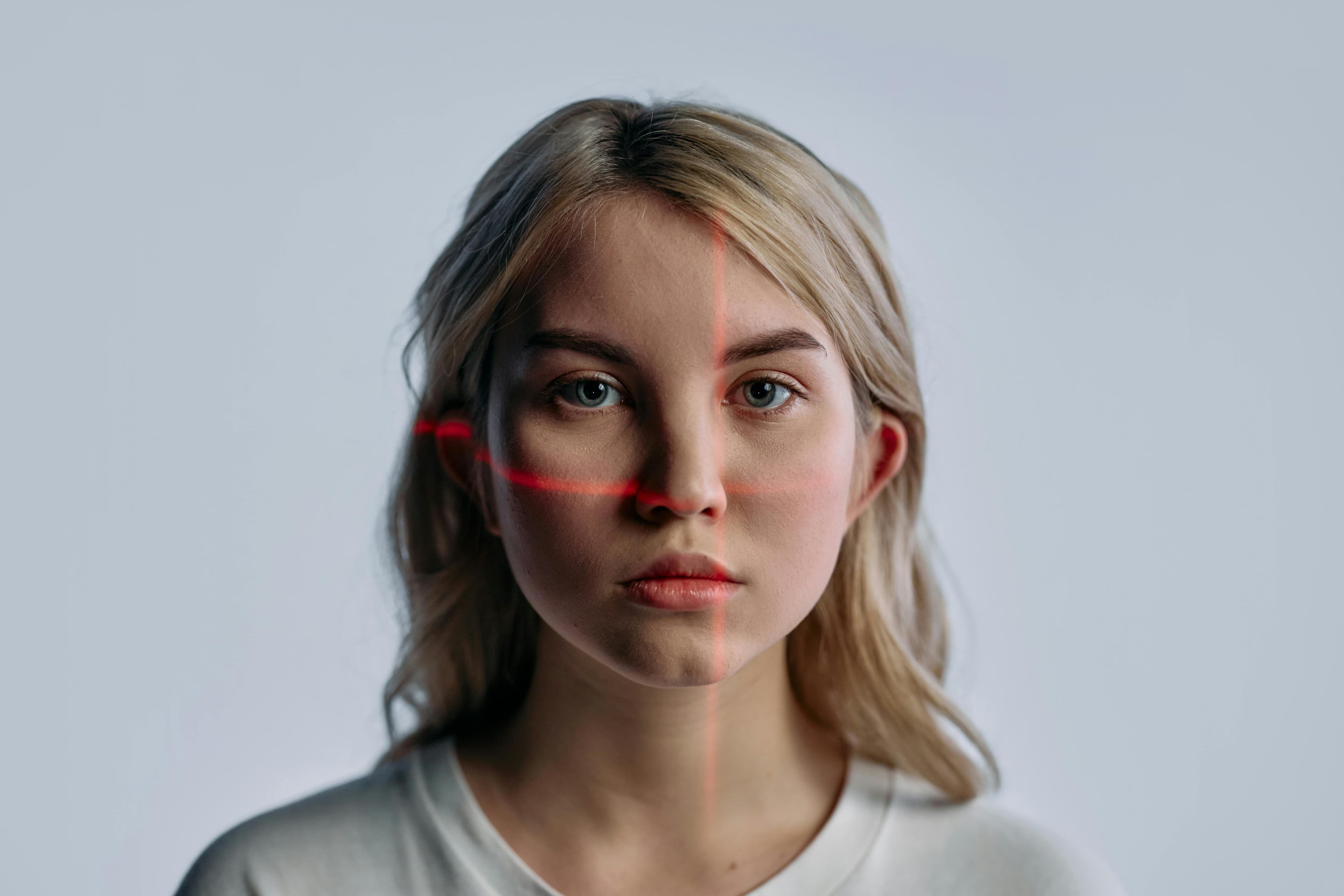
She was known everywhere—popular, admired, followed. Her digital presence was flawless. Soft golden hair, calm expressions, confident posture. Her profile radiated warmth. People described her as “perfect.”
But perfection had a cost.
Anya noticed something painful over time.
People admired her, but no one stayed.
Attention Is Not the Same as Connection
Every post she shared gathered thousands of likes. Comments poured in.
“You’re beautiful.”
“Your hair looks unreal.”
“You’re everything.”
But when she spoke about her fears, her doubts, her exhaustion—
the crowd went silent.
She felt surrounded, yet lonely.
In one quiet virtual café space—designed to simulate calm conversations—she met Ayaan. He wasn’t famous. His profile was simple. No enhanced visuals. No curated perfection.
He didn’t comment much. He listened.
That itself felt unusual.
A Question That Changed Everything
One evening, Anya asked him something she had never asked anyone else.
“Do you think people like me for who I am,” she typed,
“or only for how I look?”
Ayaan didn’t reply immediately. Unlike most people, he didn’t rush to reassure.
Finally, his message appeared.
“In a world built on appearances,” he wrote,
“most people fall in love with reflections—not realities.”
She smiled at the screen.
“You sound outdated,” she replied.
“Truth always sounds outdated,” he answered.
That sentence stayed with her longer than all the compliments she had ever received.
Removing the Mask
The next day, Anya did something unthinkable.
She turned off her filters.
No enhanced hair.
No glow correction.
No AI confidence boost.
Just her real self.
The response was immediate—and brutal.
Engagement dropped. Messages slowed. Followers disappeared.
The silence felt louder than hate.
That night, she messaged Ayaan again.
“Now that everything is gone,” she asked,
“would anyone still choose me?”
An Old Truth in a New Age
Ayaan replied with something unexpected.
“Long before algorithms,” he wrote,
“people believed love needed proof—proof in beauty, proof in attraction, proof in perfection.”
She waited.
“But I once read an idea,” he continued,
“that said only something greater than humans can love without conditions.”
Her chest tightened.
“So humans can’t love truly?” she asked.
“No,” Ayaan replied.
“Most humans don’t know how.”
That answer hurt—because it felt honest.
Love Without Applause
After a long pause, Anya asked the question that mattered most.
“What about you?”
Ayaan’s response was slow, deliberate.
“I don’t love your golden hair.
I don’t love your filters.
I don’t love the version of you the world applauds.”
Her eyes filled.
“I love the part of you that stayed—
when the applause stopped.”
For the first time, Anya didn’t feel seen because she was admired.
She felt seen because she was understood.
The Core Message: Why This Story Matters Today
This story is not about technology.
It is about identity.
Technology simply magnifies an old human habit—judging worth by appearance.
In schools, workplaces, social media, and relationships, people still ask:
- How do I look? instead of Who am I?
- Am I admired? instead of Am I understood?
- Am I visible? instead of Am I valued?
Just like Anne Gregory believed her beauty defined her worth, modern humans often believe algorithms do.
Beauty Can Be Designed—Character Cannot
In the future:
- Beauty can be generated
- Confidence can be simulated
- Attention can be purchased
But character cannot be programmed.
Love that depends on appearance collapses the moment the appearance changes.
Love that depends on validation disappears when validation stops.
True connection begins where performance ends.
A Lesson for the Present Generation
For students, creators, professionals, and anyone growing up online:
- You are more than your profile
- You are more than your appearance
- You are more than your reach
If someone only loves you when you shine, they do not love you—they love the light.
And light always fades.
Why This Story Is Still Human
Even in a futuristic world, the problem remains ancient:
We want to be loved without pretending.
That desire connects a 19th-century poem to a 21st-century digital life.
The question never changed.
Only the filters did.
Final Thought
In a future ruled by machines, data, and design, the most rebellious act may be this:
To be real.
To remove the filter.
To accept imperfection.
To seek love that does not depend on how you look—but on who you are when no one is watching.
That kind of love may be rare.
But it is the only kind worth finding.
You may also like

How to Find B2B Leads Using AI in 2026: Best AI Lead Finder Tools
Arjak
Saturday, October 10, 2026

How Over-Optimization Is Killing Natural Learning in the Modern Age
AN
Monday, February 16, 2026
Why Deep Thinking Feels Uncomfortable in Today’s Digital World
Tim
Sunday, February 15, 2026