Wednesday, January 7, 2026
Doctors vs AI? Why the Future of Medicine Still Needs Humans
Arjak

Will Artificial Intelligence Eliminate Doctors, Diagnostic Tools, and Surgeons?
A Clear Look at What AI Will Transform—and What It Can Never Take Over
Why This Debate Exists in the First Place
Healthcare is undergoing one of the most dramatic technological shifts in its history.
Artificial intelligence now plays an active role in hospitals, from analyzing medical images to assisting in surgical procedures. As these systems become more capable, a persistent concern has emerged:
Will AI eventually replace doctors, diagnostic equipment, and surgeons altogether?
Despite widespread speculation, the realistic answer is no.
What will change is how medicine is practiced—and how responsibility is shared between humans and intelligent tools.
Where AI Already Plays a Role in Modern Medicine
AI has moved beyond theory. It is already embedded in daily clinical operations.
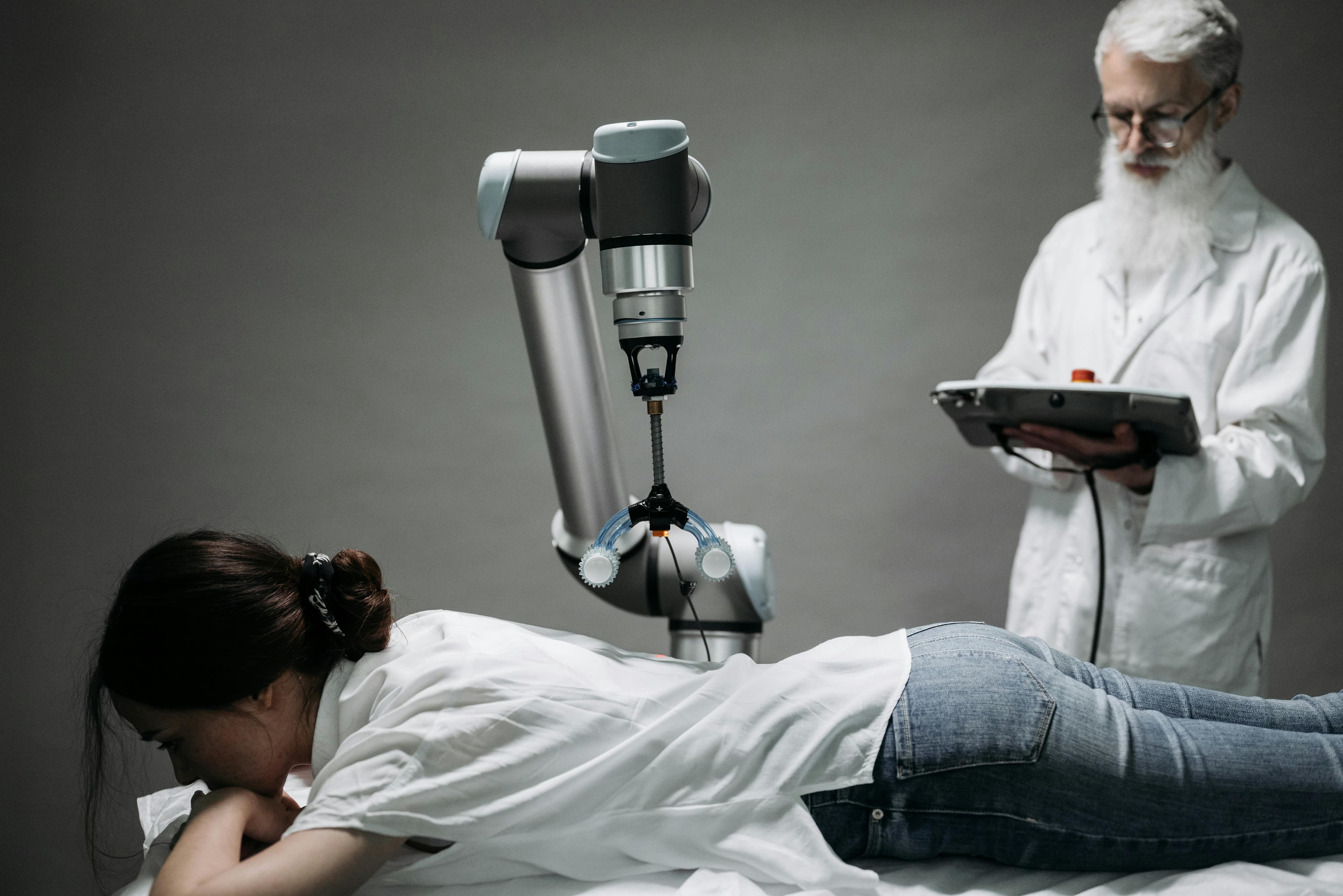
Current Applications of AI in Healthcare
Today’s AI systems can:
- Examine medical scans for subtle abnormalities
- Flag early indicators of cancer, stroke, or heart disease
- Process lab data and vital signs at scale
- Estimate disease risk using population-level datasets
What AI does not do is make final medical decisions.
Instead, it produces probability-based insights.
Interpretation and responsibility remain human.
Why Medical Diagnosis Cannot Be Fully Automated
Diagnosis is not just pattern recognition—it is judgment under uncertainty.
Human Factors AI Cannot Replicate
Two patients with identical imaging results may need completely different treatments due to:
- Personal medical history
- Social and environmental factors
- Psychological state
- Individual values and preferences
AI evaluates data in isolation.
Doctors integrate data into the lived reality of a person.
That gap cannot be closed by computation alone.
Will AI Replace Diagnostic Machines—or Redefine Them?
Rather than eliminating diagnostic tools, AI is reshaping how they function.
The Next Generation of Diagnostic Technology
AI-enhanced devices will:
- Deliver faster scan interpretations
- Improve detection accuracy
- Reduce human error and fatigue
- Standardize clinical reporting
However, medicine is not a closed system.
New illnesses emerge.
Rare disorders appear without precedent.
Symptoms often defy established patterns.
Because AI relies on historical data, it struggles when history offers no guidance.
Surgery and Robotics: Assistance, Not Autonomy
Robotic surgery is often misunderstood as independent automation.
The Reality of Surgical Robots
Surgical systems today:
- Operate under direct surgeon control
- Execute predefined movements
- Require constant human oversight
- Cannot independently adapt to emergencies
During operations, surgeons routinely face unexpected complications such as:
- Sudden hemorrhage
- Unusual tissue responses
- Rapid changes in patient stability
These situations demand intuition, ethical judgment, and improvisation—capabilities machines do not possess.
The Elements of Healthcare AI Cannot Replace
1. Genuine Human Connection
Medical care is built on trust.
Patients rely on doctors for:
- Emotional reassurance
- Honest explanations
- Compassion during uncertainty
While AI can mimic empathetic language, it does not experience concern or responsibility.
2. Moral and Ethical Accountability
Healthcare decisions often involve dilemmas with no objectively correct answer, including:
- End-of-life choices
- Allocation of limited resources
- Risky or experimental treatments
- Respect for cultural and family values
Algorithms cannot bear moral responsibility.
Humans must.
What AI Will Replace: Repetitive Work, Not Physicians
AI’s real impact lies in task automation.
Functions AI Will Gradually Take Over
- Initial scan screening
- Clinical note generation
- Administrative coordination
- Continuous patient monitoring
- Predictive warning systems
This shift reduces clinician burnout and allows healthcare professionals to focus on what matters most: patients.
The Physician of the Future
Doctors will not compete with AI—they will collaborate with it.
Future clinicians will:
- Use AI as a decision-support partner
- Deliver safer and faster care
- Focus on complex and ambiguous cases
- Spend more time in direct patient interaction
Historically, technology has expanded human capability—not erased it.
A Realistic Picture of Healthcare in 2040
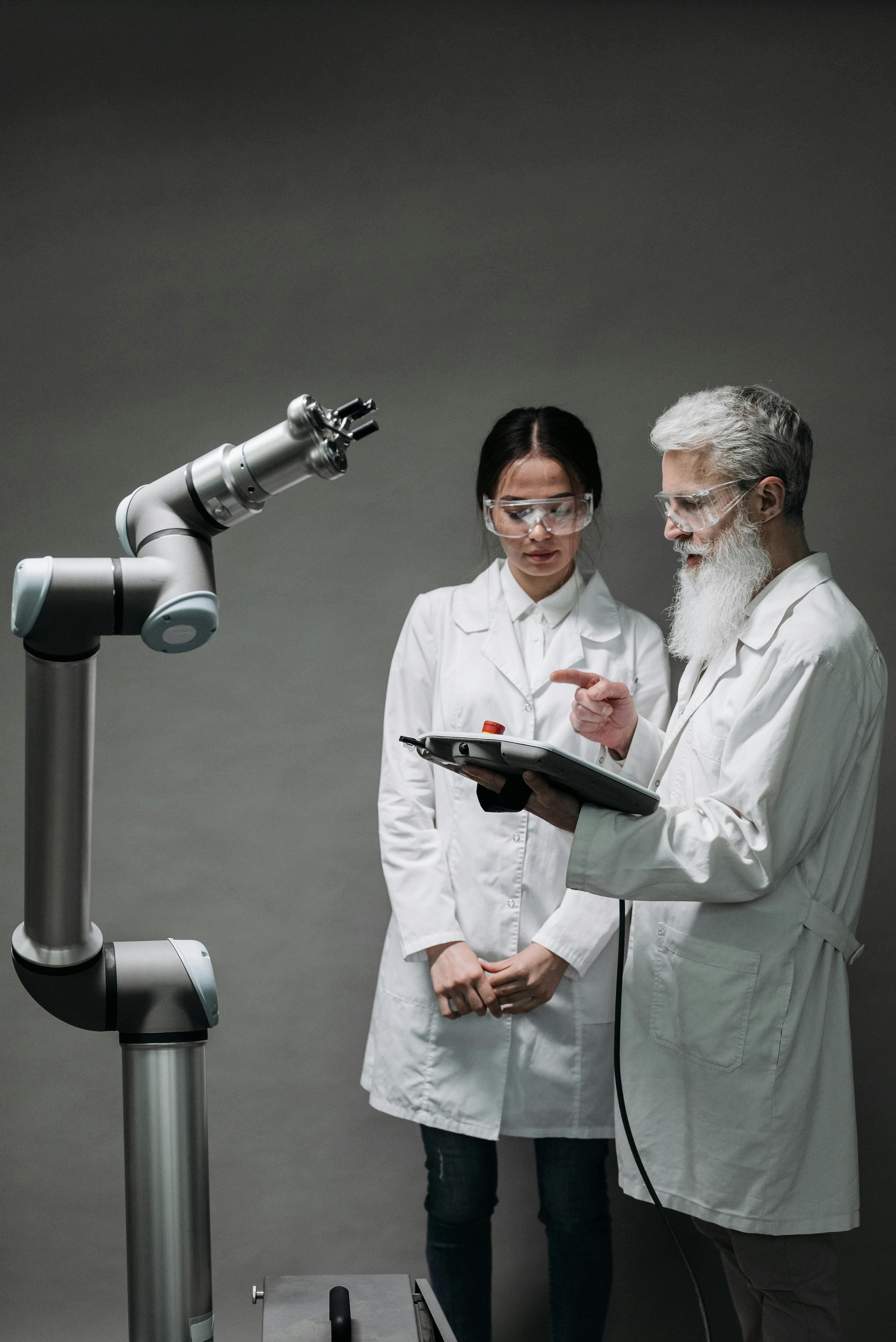
How Human-Led, AI-Supported Medicine Will Function
- AI rapidly analyzes scans, vitals, and records
- Potential diagnoses are ranked by risk
- Physicians assess patients face-to-face
- Treatment decisions remain human-controlled
- Surgical robots assist under supervision
- AI tracks recovery and alerts clinicians
AI informs.
Doctors decide.
Why Fully Automated Healthcare Would Be Dangerous
Removing humans from medicine introduces serious risks:
- Embedded bias in algorithms
- Overconfidence in flawed predictions
- Poor handling of rare or novel cases
- Unclear legal and ethical accountability
Machines cannot be held responsible for harm.
Healthcare requires accountability.
What This Means for Future Doctors
AI is not a threat—it is a filter.
Medical professionals who:
- Adapt to new tools
- Commit to lifelong learning
- Strengthen communication and ethical reasoning
Will become indispensable.
Those who resist progress risk irrelevance—not because of AI, but because of inflexibility.
Final Answer: Will AI Replace Doctors?
No.
Artificial intelligence will transform medicine, but it will not replace doctors, surgeons, or human judgment.
AI will:
- Improve diagnostic accuracy
- Assist complex procedures
- Reduce errors
- Accelerate care delivery
But it will never:
- Possess empathy
- Carry moral responsibility
- Be accountable for human life
The future of healthcare is not a contest between humans and machines.
It is a partnership.
And in that partnership, doctors remain essential.
You may also like

How to Find B2B Leads Using AI in 2026: Best AI Lead Finder Tools
Arjak
Saturday, October 10, 2026

How Over-Optimization Is Killing Natural Learning in the Modern Age
AN
Monday, February 16, 2026

Why Deep Thinking Feels Uncomfortable in Today’s Digital World
Tim
Sunday, February 15, 2026