Sunday, January 11, 2026
Vibe Coding vs Manual Coding: The New Future of Programming
Mohd Ayan
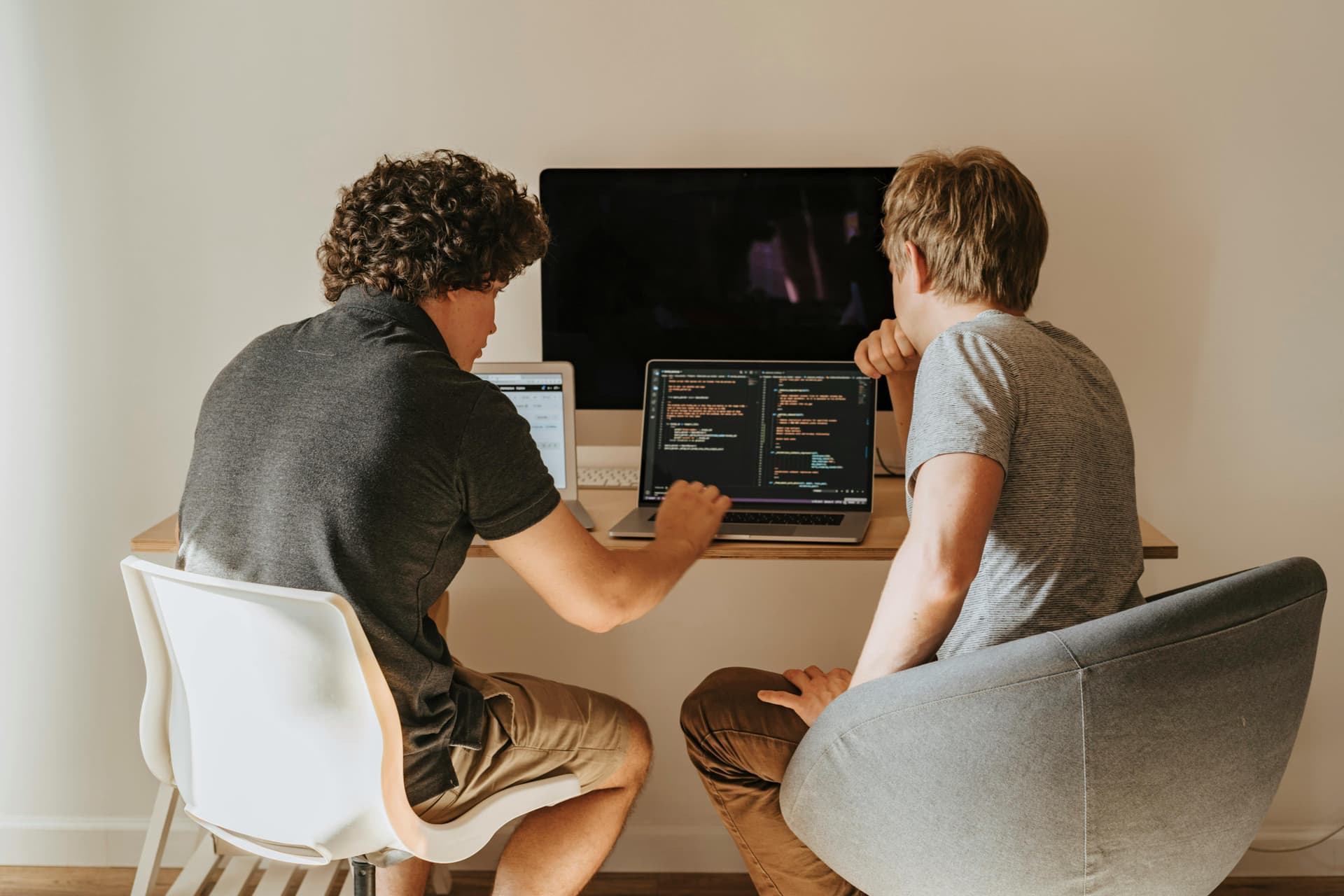
Vibe Coding vs Manual Coding: How Programming Is Quietly Being Redefined
Software development is entering a transitional era that feels subtle on the surface but profound underneath. For most of computing history, programming has meant one thing: humans manually translating ideas into precise instructions using formal languages. That assumption is now being challenged—not by better syntax, but by a fundamentally different way of thinking about how software is created.
This shift is often described as vibe coding, an approach that prioritizes intent, experience, and direction over explicit implementation. When contrasted with manual coding, it raises an important question: is programming still about writing code, or is it becoming about shaping outcomes?
Understanding the difference between vibe coding and manual coding is no longer optional for developers, designers, or product leaders who want to stay relevant as software creation evolves.

Manual Coding: Precision Through Explicit Control
Manual coding is the classical model of programming. Developers work directly with programming languages—such as Python, JavaScript, C++, or Go—writing instructions that define exactly how a system should behave. Every variable, function, and control flow decision must be specified deliberately.
This approach places responsibility squarely on the developer. Nothing happens unless it is explicitly coded. That rigidity is not a flaw—it is the source of manual coding’s strength.
Why Manual Coding Still Dominates Critical Systems
Manual coding remains indispensable because it offers:
- Deterministic behavior – systems behave exactly as written
- Fine-grained optimization – performance can be tuned at a low level
- Security transparency – developers can reason about every operation
- Architectural flexibility – no assumptions imposed by abstraction layers
This is why manual coding underpins operating systems, databases, cryptographic systems, real-time applications, and performance-sensitive infrastructure. When correctness, speed, or safety is non-negotiable, manual coding is still unmatched.
The Cost of Precision
That same precision introduces friction:
- High learning barriers for newcomers
- Long development timelines
- Repetitive implementation of common patterns
- Cognitive overhead translating intent into syntax
Manual coding forces developers to think in the language of machines, even when the problem itself is human-centric.
Vibe Coding: Programming by Intention Instead of Instruction

Vibe coding represents a philosophical departure from traditional development. Rather than focusing on how software is built, it focuses on what the outcome should feel like.
Instead of defining implementation details, developers describe goals, preferences, and experiential qualities. The system—often powered by AI, design systems, or generative tooling—handles the translation from intent to executable code.
You don’t specify every rule. You set direction.
What “Vibe” Means in Programming
In this context, “vibe” refers to:
- Visual and interaction style
- Behavioral expectations
- Aesthetic consistency
- User experience priorities
For example, instead of writing UI logic manually, a developer might specify that an interface should feel “minimal, responsive, and calming,” and then iteratively refine what the system generates.
This is not guesswork—it’s guided generation.
Technologies That Enable Vibe Coding
Vibe coding exists because several technologies have matured simultaneously:
- AI-assisted code generation that interprets natural language
- Component-driven frameworks that abstract common patterns
- Design-to-code pipelines that convert visuals into logic
- Low-code and no-code platforms that reduce implementation friction
What differentiates vibe coding from earlier abstraction attempts is its emphasis on experience and intent, not just speed.
Where Vibe Coding Works Best
Vibe coding excels in domains where patterns are well-established and user experience matters more than micro-optimizations.
Common examples include:
- Web and mobile interfaces
- Product prototypes and MVPs
- Internal tools and dashboards
- Marketing sites and content platforms
- Standard CRUD-based applications
In these contexts, expressing what you want is often more valuable than controlling how every instruction executes.

Why Manual Coding Still Matters (And Always Will)
Despite its advantages, vibe coding has limits. Certain problems demand explicit logic, not interpretation.
Manual coding remains essential when:
- Performance constraints are extreme
- Security requirements are unforgiving
- Hardware interaction is involved
- Algorithms are novel or experimental
- Domain rules are highly specialized
In these scenarios, abstraction becomes a liability rather than a benefit.
The Real Future: Hybrid Software Development
The future of programming is not a battle between vibe coding and manual coding. It is a synthesis.
Modern systems already reflect this reality:
- Core logic is written manually for reliability
- Interfaces are generated or assisted for speed
- Infrastructure is scaffolded using conventions
- AI tools handle repetitive or boilerplate work
This hybrid approach allows teams to move faster without surrendering control where it matters most.
How Developer Skills Are Evolving
As tooling changes, so does the definition of programming expertise.
Tomorrow’s developers are evaluated less on syntax memorization and more on:
- Architectural judgment
- Abstraction literacy
- UX and design awareness
- Ability to guide and refine generated systems
- Understanding when automation should be overridden
Programming is becoming less about typing and more about decision-making.
Accessibility and the Expansion of Software Creation
One of the most important implications of vibe coding is accessibility. By lowering technical barriers, it allows designers, founders, and domain experts to participate more directly in building software.
This doesn’t eliminate the need for engineers. It changes where their value lies—from implementation labor to system stewardship.
More people can build. Fewer people need to fight syntax to express ideas.
Honest Trade-Offs of Vibe Coding
Vibe coding is not a magic solution. It introduces real compromises:
- Generated code may be inefficient
- Debugging can be indirect
- Customization may be constrained
- Over-abstraction can hide important details
Understanding these trade-offs is what separates effective hybrid developers from tool-dependent ones.
Vibe Coding vs Manual Coding: A False Dichotomy
Framing this shift as a competition misses the point. Manual coding is not becoming obsolete, and vibe coding is not a replacement—it’s an extension.
Manual coding protects the ceiling of what’s possible.
Vibe coding raises the floor of who can participate.
Together, they redefine programming as a spectrum rather than a single discipline.
Final Thoughts: Programming After Syntax Dominance
The future of programming belongs to those who can operate across levels—who understand low-level mechanics while thinking in high-level intent. Vibe coding is not about abandoning rigor. It’s about applying rigor where it matters and abstraction where it helps.
Developers who embrace both manual precision and intent-driven tooling won’t just survive this shift—they’ll define it.
You may also like
How to Find B2B Leads Using AI in 2026: Best AI Lead Finder Tools
Arjak
Saturday, October 10, 2026

How Over-Optimization Is Killing Natural Learning in the Modern Age
AN
Monday, February 16, 2026

Why Deep Thinking Feels Uncomfortable in Today’s Digital World
Tim
Sunday, February 15, 2026